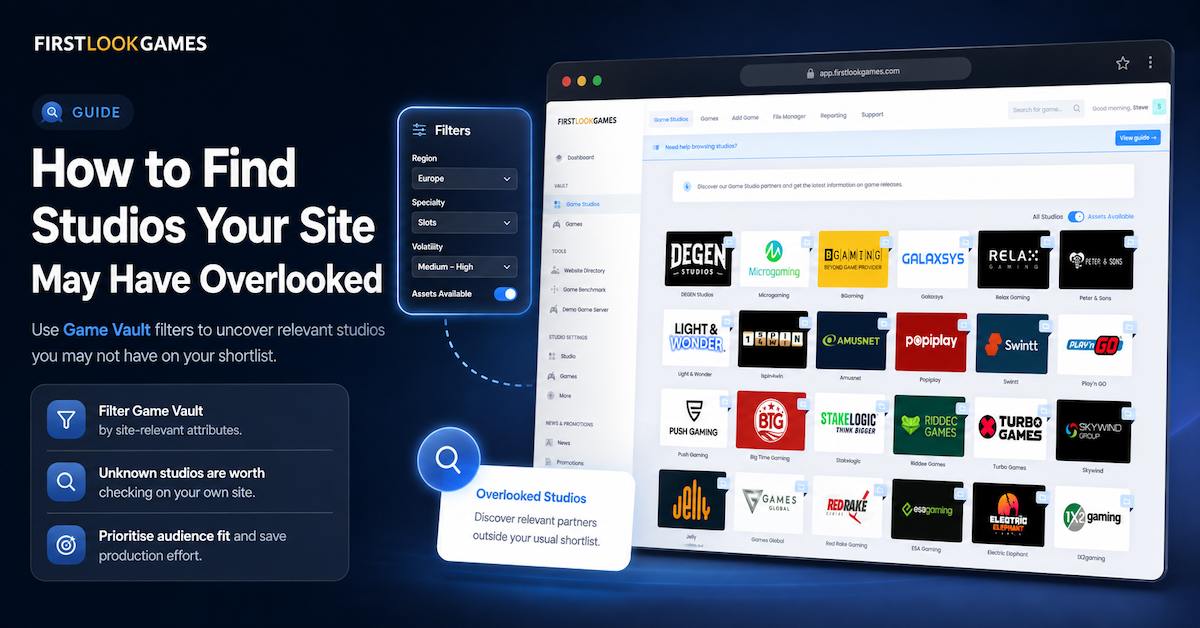
Most publishers have an extensive list of the studios they cover. It is usually built from habit: the studios that email regularly, the ones whose games have historically performed well, the names that appear on competitor sites.
The studios that fall outside that long-trodden list are harder to notice. They may make games that fit your audience but have never sent you a press release. They may be producing titles in your niche without you realising they exist. And they be the next rising star worth backing with content before your competitors do…
Three key takeaways
- Filter the Game Vault by the attributes that define your site’s content focus. Every studio in the results has games matching the criteria you selected.
- Studios you do not recognise are not necessarily gaps, but they are worth searching your own site to confirm whether coverage exists.
- Assess each candidate by audience fit first, then by how much production effort the studio’s data and assets save you.
Why your mental list leaves studios out
A publisher’s awareness of studios is often shaped by who contacts them or who has the best PR. Studios that email regularly stay on the radar. Studios that focus in a different market, but who do hold relevant licenses and operator distribution in your geos, can remain under the radar even when their games are a strong fit.
Relying on that awareness means your content plan is partly determined by which studios are good at outreach. A studio that is less active in promoting itself but produces games matching your editorial focus may never make it onto your shortlist.
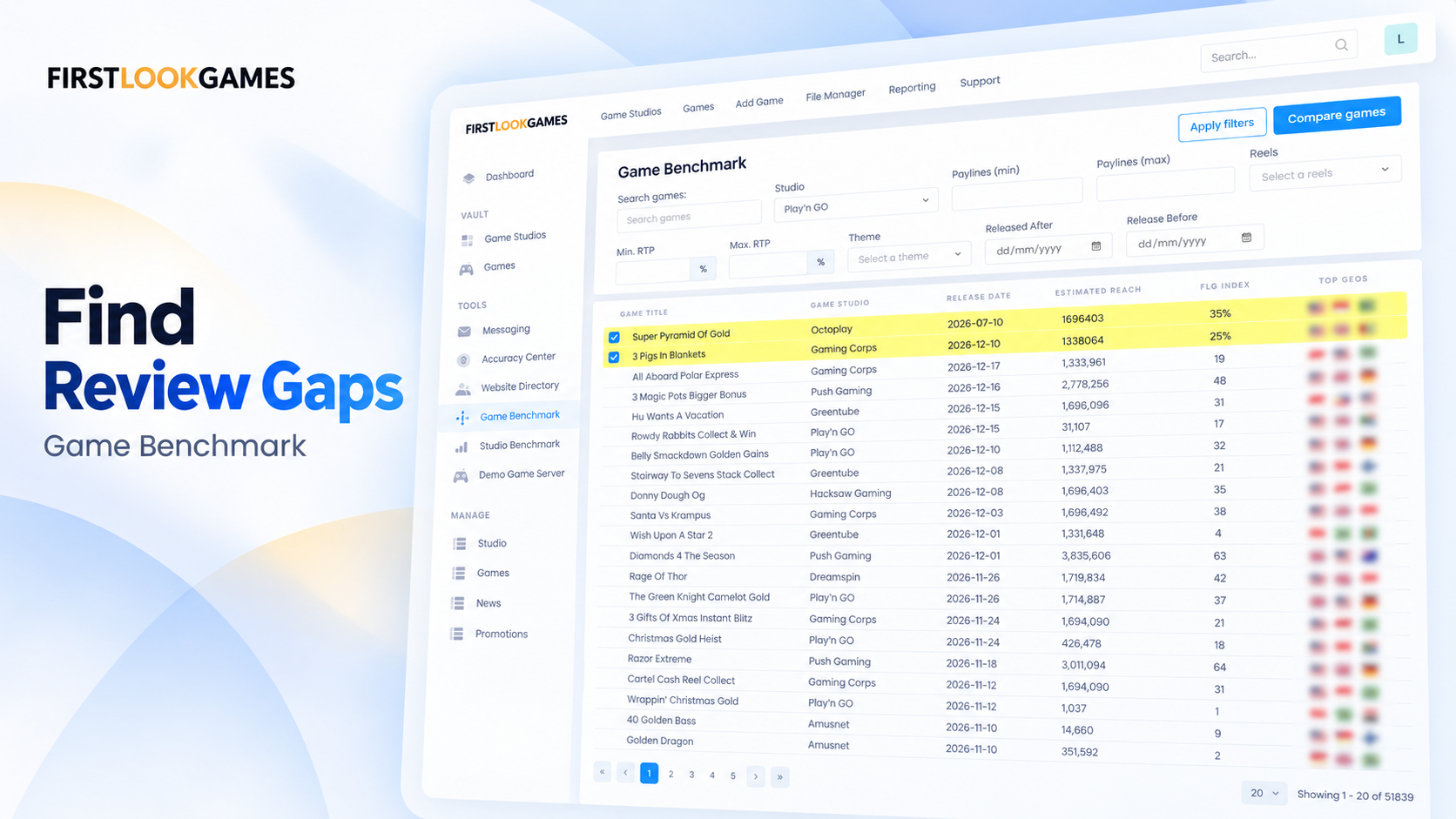
The First Look Games Game Vault is filterable by the game attributes your audience cares about. The exercise is designed to surface studios that appear in your filtered results and may be absent from your site to allow you to take charge of what game content you could deliver to your audience to stand out, rather than just go with the flow.
What FLG shows you
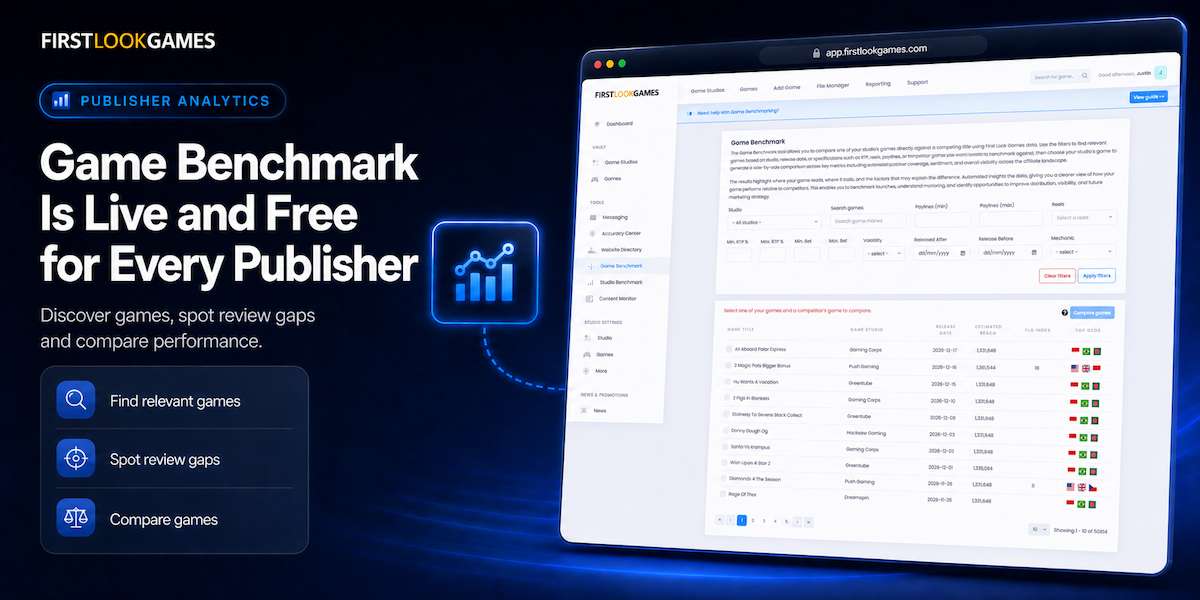
The Game Vault contains every game available on FLG. You can filter by RTP range, volatility, paylines, reels, game type, mechanic, theme and playable markets. You can filter by studio and by release date. The results show you games, and the studios behind them, that match the attributes you select.
From any game you can open the studio profile. The profile lets you explore the studio’s full FLG catalogue, how many games they have and their release dates, while individual game pages show which data and demos are available. This tells you whether a studio is actively producing titles in your niche or has a single release from two years ago.
What you do with it
Define your niche in filter terms. Before opening the Game Vault, decide what your site actually covers. Theme, volatility, game type, mechanic, the attributes that define your audience. The tighter your definition, the more relevant the results.
Filter and scan for unfamiliar names. Apply your niche filters. Scan the studio names in the results. The ones you cover regularly will be obvious. The ones you do not recognise are your candidates, studios whose games match your chosen criteria but may have never appeared on your site.
Verify against your own site. For each unfamiliar studio, search your own website or CMS. Has the studio been covered? By you or by another writer? Does coverage exist for some of their games but not others? This step turns a hunch into a confirmed finding. A studio you do not recognise may have been reviewed by a colleague two years ago. A studio you do recognise may have five games you have never covered.
Assess audience fit before anything else. A studio that makes games your readers would find relevant is worth considering regardless of how complete its FLG data is. A studio with perfect data but a poor audience fit is still a poor content decision. Data completeness and demo availability are tie-breakers: between two good-fit candidates, pick the one that requires less research effort.
Add promising candidates to your content plan. Once you have confirmed that a studio is a genuine gap and fits your audience, decide when to cover them. A studio with a growing library may justify multiple reviews over several weeks or months.
Where to start
Log into FLG. Open the Game Vault. Apply two or three filters that match your site’s content focus. For each studio you do not recognise, search your own website. The ones that genuinely have no coverage on your site, and whose games fit your audience, are the discoveries worth acting on.
FAQ
Is this the same as finding undercovered games?
No. Finding undercovered games means looking for titles that receive relatively little publisher coverage across the market. This exercise is about identifying studios making games in your niche that may have never appeared on your own site (and potentially your competitors’), regardless of how many other publishers cover them. The question is not “what is everyone else missing?” but “what might I be missing?”
How long does this take?
Filtering the Game Vault takes a few minutes. The longer part is searching your own site for each unfamiliar studio and assessing whether the audience fit is strong enough to justify coverage. For a tightly defined set of filters, the exercise can take roughly the time you might otherwise spend reading and prioritising a batch of press releases, but the results are determined by your filters rather than by which studios sent an email that week.