Every publisher site you visit seems to feature the same handful of games. The studio flagships. The titles receiving the largest promotional push. They are safe choices: readers recognise them, and studios are happy to see them promoted.
But safe choices do not make a site stand out. If your game pages look identical to your competitor’s, a reader has no reason to choose you. The opportunity is in the games your competitors are not covering. The question is how to find them.
Three key takeaways
- FLG’s Game Vault lets you search by studio, theme, RTP, volatility, game type and more – so you can surface games that match your content focus, not just the popular releases.
- The Lowest Indexed Games on your dashboard show titles that appear on relatively few publisher sites across FLG’s tracked list, pointing you to where the coverage gaps might be.
- Not every game with low coverage is an opportunity. The ones worth investigating come from studios with a track record, a growing library and games that fit your audience.
Why sorting by popularity misses the point
Most publishers discover games the same way: studio press releases, operator promotion calendars, and whatever is trending on competitor sites. This approach surfaces the same titles for everyone. It also means you are always reacting – you learn about a game when someone else decides you should.
The alternative is to start from the other end. Instead of asking “what is everyone covering?”, ask “what is being covered less than it could be – and does it fit my site?” That question needs data, not inbox volume.
What FLG shows you
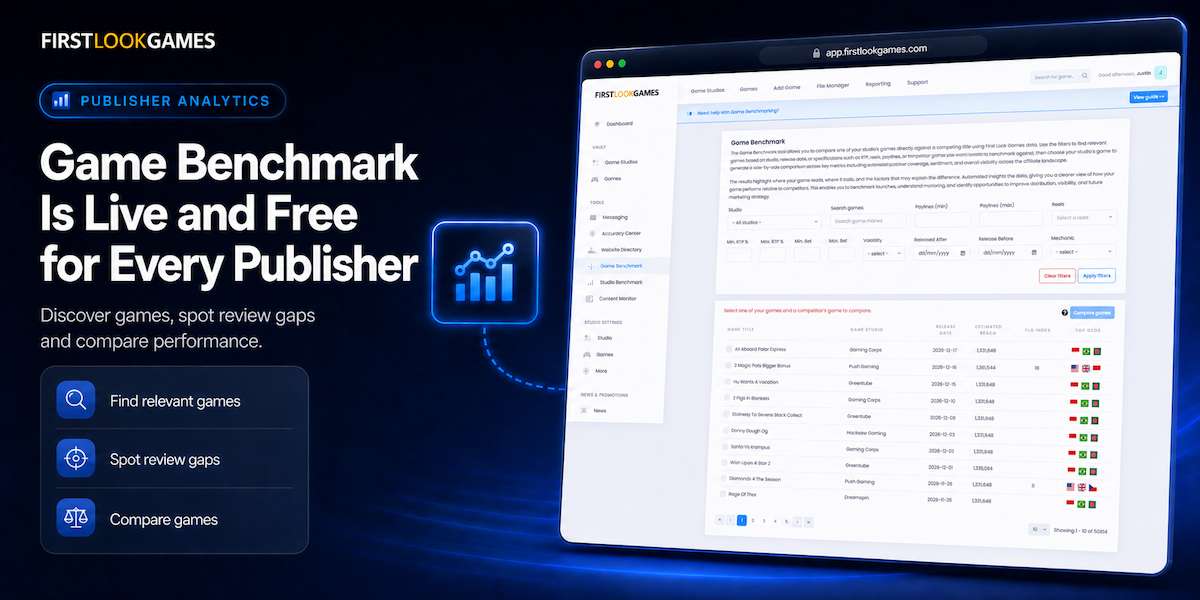
The Game Vault is the starting point. It gives you structured filters that a press release never will: RTP range, volatility, paylines, reels, game type, mechanic, theme and playable markets. If your site focuses on high-volatility mythology slots, you can find every game in FLG that matches those attributes in a few clicks. You are no longer limited to the games that happen to arrive in your inbox that week.
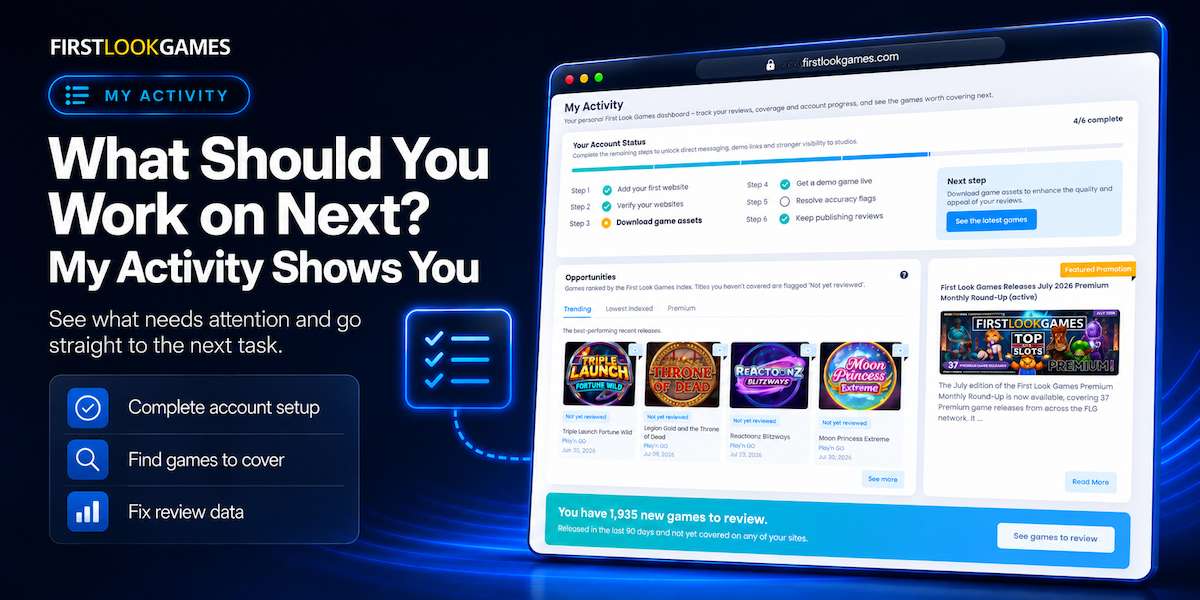
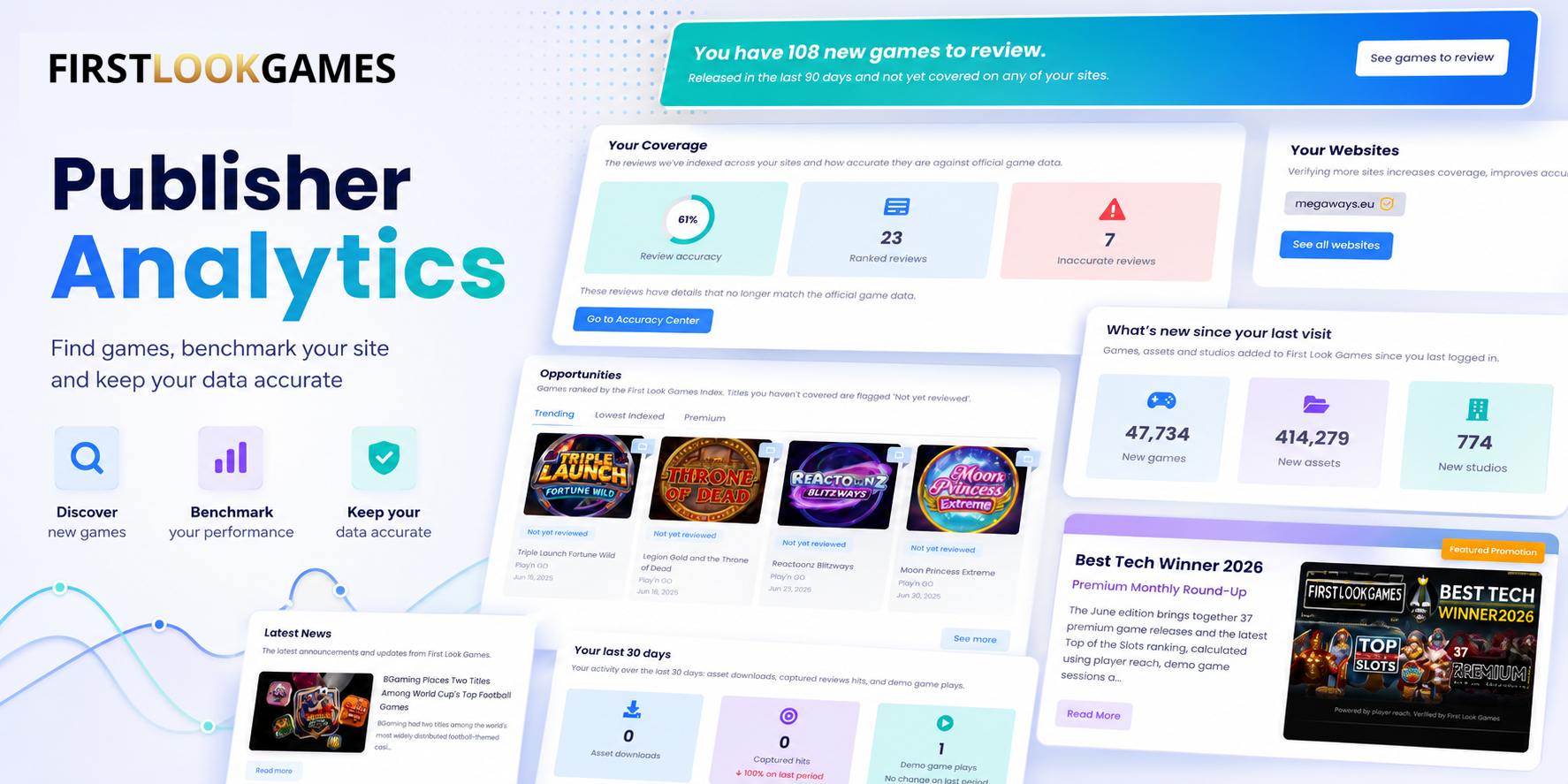
From your dashboard, the Lowest Indexed Games section shows you the titles on FLG that appear on the fewest publisher sites within FLG’s tracked list. These are not necessarily obscure titles nobody wants – many are from established studios that simply have not built broad affiliate coverage yet. The section gives you a direct view of the coverage gap.
What you do with it
Start with your content filter. Decide what kind of games your site covers – by theme, volatility, game type or studio. Use the Game Vault to build a shortlist of games that match those criteria.
Then check the coverage. A game that appears in your Lowest Indexed Games and also matches your content filter is worth a closer look. Read the studio’s game sheet. Check whether the game has a playable demo on FLG. If the fundamentals look sound and the game fits your site, you have found something your competitors may be missing.
Here is how that looks as a complete workflow. A publisher specialising in high-volatility slots opens the Game Vault, sets volatility to “High Volatility,” selects a mythology theme, and sets the release date to the last six months. The results show a game from a studio with eight other titles on FLG, all regularly updated with complete game data. The game appears in the publisher’s Lowest Indexed Games – meaning relatively few other publishers have covered it. The publisher checks the demo, confirms the game sheet data is complete, and decides to feature it. That is a content decision made from evidence, not from whatever press release landed that morning.
Distinguish between a genuine opportunity and a game with structural reasons for low coverage. A game from a studio with one title and no recent releases may stay undercovered for good reason. A game from an active studio – multiple releases in the past year, complete game data and demos available, several of whose other games already fit your audience – is the one worth your time.
When you find a promising game from a studio you have not covered much, check what else they have. The Game Vault shows you their full FLG catalogue. You may find two or three games worth featuring, not just one.
What this does not do
FLG does not tell you which games to feature. It shows you what games exist, what attributes they have, and how much publisher coverage they currently receive. The editorial decision – whether a game belongs on your site – is entirely yours.
The Lowest Indexed Games data reflects FLG’s tracked publisher list. A game may have coverage on sites FLG has not yet indexed. Low coverage in FLG’s data is a signal worth investigating, not a complete picture.
Coverage data also says nothing about player demand. A game with little publisher coverage may or may not attract readers. FLG gives you the discovery layer; what you do with it depends on your knowledge of your audience.
Where to start
Log into FLG. Open the Game Vault. Pick one filter – theme, volatility, or studio – that matches your site’s focus. Apply it and limit the release date to the last 12 months. The list you get is your first shortlist of games receiving less publisher attention than they might warrant.
Browse the Game Vault to start finding games. Not yet registered? Create a publisher account to access the full library.
FAQ
How do I know if a low-coverage game is worth featuring?
Look at the studio behind it. A studio with multiple releases in the past year, complete game data on FLG and playable demos available is a stronger signal than a studio with a single title and no recent activity. Check whether the game fits your site’s content focus. A game that does not match your audience is not worth covering regardless of how few publishers feature it.
Does the Lowest Indexed Games data mean nobody is covering those games?
No. It means the games appear on relatively few publisher sites within FLG’s tracked list. They may have coverage on sites FLG has not yet indexed. The data is a starting point for investigation – it tells you where to look, not what to conclude.